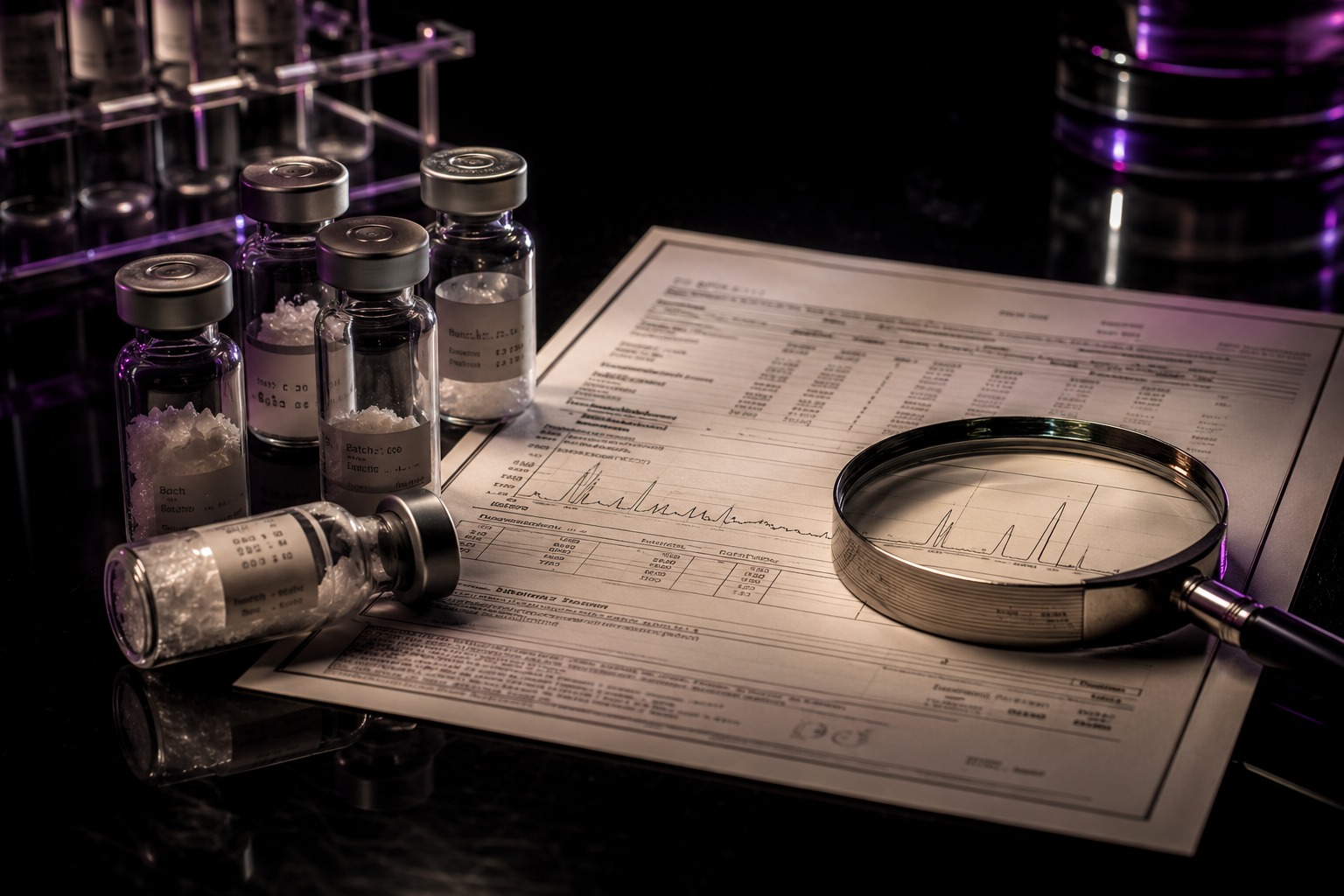
1. Start with traceability
Check the compound name, batch number, analysis date and sample identifier. Without a matching batch number, the document may concern completely different material.
2. Identify what was actually tested
HPLC describes the chromatographic profile and main peak area. LC–MS helps confirm molecular mass and identity. They provide complementary answers.
3. Look for source data
A useful COA includes a chromatogram, spectrum, method conditions and laboratory identifier. A percentage without the underlying plot provides little context.
4. Understand the limits
A COA does not automatically establish sterility, endotoxin level, transport conditions or biological safety. Those questions require separate tests.